Retirement Income Certified Professional®
Retirement Income Certified Professional (RICP®) designation from
the American College of Financial Services.
Specializing in intergrading safe insurance solutions for a portion of your portfolio.

The American College of Financial Services
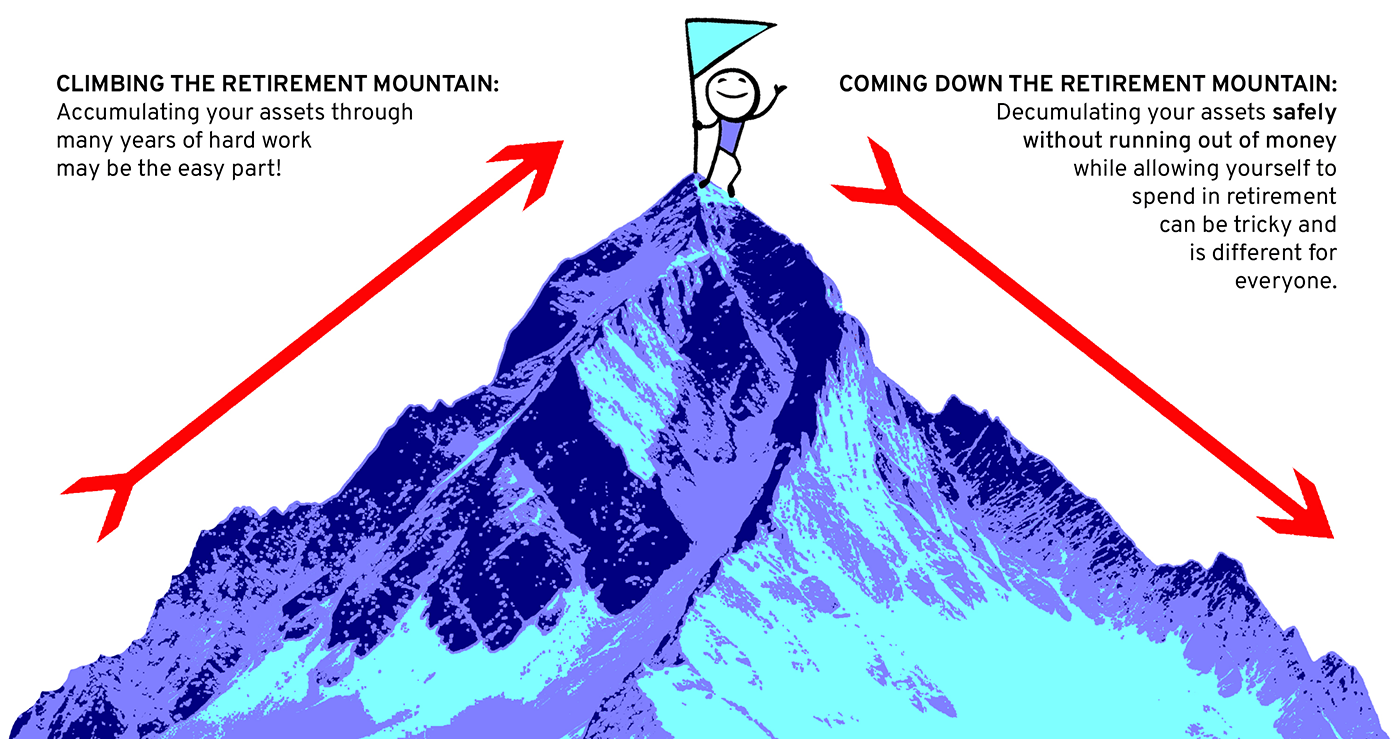
(a non-profit, accredited college focused on education & training of financial professionals) has categorized the dangers to a retirement income plan into 18 different risks:
Longevity Risk
It may seem strange to complain about too much of a good thing, but one of the biggest concerns for retirees is outliving their assets. You make several assumptions during the retirement income planning process, including when will you die. If you design your withdrawal strategy with an assumed death of 82 but you live until 97, there is a danger of exhausting your savings. However, many of us would not enjoy the Spartan retirement that comes with assuming death at 120 years.
Inflation Risk
The existence of inflation is a reality and not a risk. The risk is assuming too low of a rate when planning your expenses. Like the problem with longevity, if you choose too high of a number, your withdrawal rate may be too low to support your desired lifestyle.
Excess Withdrawal Risk
Of all the risks on this list, excess withdrawal risk may be the one you may have the most control over. Retirees who battle this risk probably made the mistake of making their withdrawal strategy meet their spending wishes instead of adjusting their spending to fit a sustainable number. There has been a lot of research done in the quest for the perfect distribution rate, and while different researchers may come up with different rates, none of them claimed 10% or more is a supportable number. Please be realistic.
Heath Expense Risk
Medical costs are a concern for most retirees. It's not just the cost of treatment, but you need to be aware of coverage changes and the randomness of the spending. When budgeting, you know your rent expense will be predictable month in month out, but budgeting for your health? Beyond insurance premiums, you don't know if you will get sick or how sick you may get.
Long-Term Care Risk
Similar to health expenses, long-term care is a wild-card in your planning. You do not know if, when, or how long you will need care. While in this post I will avoid discussing solutions (that would change the size of this posting from a web page to something closer to the Internal Revenue Code!), from experience, many people dismiss this risk thinking they will simply get LTC insurance. Even if you do get the insurance, there may still issues to be addressed. Most LTC policies come with caps, both in amount paid and length of coverage. Deciding on a policy means finding the right balance of coverage and affordability.
Frailty Risk
It's just a fact that as we age, we lose a step or two. Mentally we are not as sharp, and we are physically weaker. As a result, we are more prone to making mistakes in our finances: forgetting to pay a bill, for example. Physically we may need to renovate our house or even move. Additionally, Frailty Risk creates exposure to the number seven risk.
Financial Elder Abuse Risk
The elderly are at higher risk for abuse than the general population. It is not only frailty that leads to this; feelings of isolation or loneliness can contribute to susceptibility. More depressing, the majority of abusers are people the victim already trusts: friends, family, and yes, financial advisors. The effects are not just economic: shame and fear can take an emotional toll as well.
Market Risk
Along with Longevity Risk, Market Risk is probably most prominent in the minds of retirees. Few people can afford to keep all their money in a bank, so there will always be some chance that your assets can drop in value.
Interest Rate Risk
This may affect you whether rates move up or down. The amount of income you receive from bonds, CDs, and savings accounts decreases as rates decrease. When rates rise, however, debt becomes more expensive.
Liquidity Risk
Some of your assets are not always easy to sell. With stocks, CDs, etc., you can generally have the cash in hand with in a day or two. But houses, collectibles, and your business can have much longer cash conversion times. Even more concerning is the risk you may not find a buyer when you are ready to sell.
Sequence of Returns Risk
Retirement income plans assume an average annual rate of return on your investments. Even if you guess the number correctly, it is still only an average - there will be years when you earn more and earn less. The problem arises when the "earn less" times are at the beginning of your retirement. Many planning tools try to show this risk by using "Monte Carlo" analysis. The goal of Monte Carlo is to show how your spending and savings could be impacted based on when the up & the down years happen during your retirement.
Forced Retirement Risk
Your plan includes working up to a certain point. But what if that doesn't happen? Your health, family obligations, or job loss could force your retirement to begin earlier than planned. An early exit not only forces you to start using your savings before you intended, but you also have added fewer dollars to your retirement accounts than planned.
Re-Employment Risk
Primarily for extra income or maybe even benefits, many people plan on some sort of job during retirement. Working in retirement can also help with issues of isolation and mental engagement. Like the Forced Retirement Risk, you have no assurance you will be able to work or if your skills will be needed.
Employer Insolvency Risk
Some employers offer benefits to their retired employees. Pensions and health insurance are the most common, but there could be other benefits too. Naturally you will account for these benefits in your income plan. However, if the company goes bankrupt those benefits are at risk. Yes, the PBGC (Pension Benefit Guaranty Corporation) backstops the pension, but not necessarily at 100% of the promised amount. And there is no such protection for the other benefits. Moreover, your old company doesn't need to go bankrupt; the company may decide to reduce or stop a program at any point. Adding insult to injury, the cost to you in replacing the lost benefits will be more expensive than what your company charged you.
Loss Of Spouse Risk
Especially when the primary breadwinner goes first, there is likely a reduction in income. Although household expenses will go down some, for many, the drop in income is more significant. Your Social Security benefit will drop anywhere between 33% - 50%. However, some expenses may go up, like income tax. There is a concept called the "Widow's Penalty," where the income decrease is not significant enough to offset the tax rate increase from the filing status change from "Married" to "Single:• As if that isn't enough, once again, issues of isolation and loneliness need to be considered along with depression from the loss of your partner.
Unexpected Financial Responsibility Risk
You may find yourself caring for a parent, child, or even a grandchild. Even if you know you cannot afford to help, most of us will still try, adding stress to the budget.
Timing Risk
Imagine retiring in the early 1980s right as the economy is entering a prolonged economic expansion, inflation coming down, and the stock market going up for nearly 20 years. Now imagine (or maybe you don't have to imagine) retiring in 2000, when the first ten years of retirement contains two significant bear markets in stocks and a massive global recession. You might be able to alter your retirement by a year or two, but 20 years is a bit trickier.
Public Policy Risk
The government can change laws at any time. Tax rates may vary. Social Security & Medicare rules are frequently adjusted. Moreover, there could always be unintended consequences from governmental actions that force you to change your retirement planning. It is not only the Federal government you need to watch. States can make changes that could have a significant impact. For example, what if you go through the time and expense of moving to Florida, only to have them introduce a state income tax six months later?
Let's talk about how Rob can help!
Please fill out the form below and Rob will be in touch with you very soon! Thank you.
©2026 Robert Sturgis, RICP® | All Rights Reserved.